

Two methods, one cycle
Most projects fail in one of two ways: the wrong thing gets built, or the right thing gets built badly. We use one method for each problem and connect them.
Growth-Driven Design
What to build next, and why
Launch a focused first version, watch how real people use it, and let that evidence choose the next improvement.
Spec-Driven Development
How it is built and verified
Write the requirement down before any code. Plan the work in phases. Let automated tests decide whether a phase is finished.
Continuous delivery
What connects them
Ship small releases through the same checks every time, so what we learn in one cycle reaches your users in the next.
Strategy · Clarify
A large redesign bets everything on assumptions made before anyone has used the result.
We start by writing those assumptions down: your goals, the people you serve, the journeys they take, and what research says they need. The output is a ranked wishlist, so the first build holds what matters most and nothing else.
Launch Pad · Activate
Waiting months for a complete site means months without learning anything.
We build a Launch Pad: a first version that looks and works better than what you have today, released early. It is a starting point by design, and it starts collecting real use from day one.
Plan, Build, Learn · Measure
Opinions about what to change are cheap. Evidence is harder to argue with.
Each cycle begins with a plan drawn from what the data shows, builds the highest-value item, and then checks whether it moved the number it was meant to move.
Transfer · Perfect
What one cycle teaches is wasted if it stays with the people who ran it.
We hand what we learn to your team: what worked, what did not, and what we would try next. Over time your people make better decisions about the product, with or without us.
The specification
A vague brief leaves every builder, human or AI, to guess what was meant.
We write one controlled document with numbered revisions. Each requirement says what the product shall do, should do, or may do, so there is no doubt about what was promised.
Phase plans
A specification is too large to build in one pass.
We break it into phases. Each phase has entry criteria, acceptance checks, and a place in the build log, so anyone can see what is finished and what comes next.
Tests that gate a release
Work that looks finished is not the same as work that is finished.
Every phase must pass the existing tests and its own new ones before it is committed. A failing test stops the release. Nobody talks their way past it.
Changelogs
Six months later, somebody needs to know what changed and why.
Every release records what changed in plain language. The record is written as part of the work, so it exists before anyone has to ask for it.
Verified release packages
A package that is altered between the build and your server is a risk you cannot see.
Releases are published with a checksum, and an update installs only when the package matches it. What runs on your site is what passed the tests.
Continuous delivery
We release in small steps. Each one goes through the same gates: the specification, the plan, the tests, the changelog. A small release is easy to review, easy to undo, and quick to learn from. What we learn in one cycle ships in the next.
Who does what
A person approves every stage. The AI specialists do the legwork under direction, and each stage leaves something you can ask to see.
| Stage | Approves | AI specialists | What you can ask to see |
|---|---|---|---|
| Clarify | Jeremy | Scout, Scribe | Discovery brief, goals, personas, journeys |
| Specify | Jeremy | Scribe, Forge | Specification, phase plans, acceptance criteria |
| Design | Jeremy | Forma, Scribe | Flows, wireframes, content outline |
| Build | Jeremy | Forge | Code changes with a summary of tradeoffs |
| Verify | Jeremy | Lens | Test plan, test run, accessibility findings |
| Release and operate | Jeremy, Tim | Relay | Release log, maintenance summary |
Eli coordinates requests and handoffs across every stage. Meet the team.
Ask to see it
Rigor is easy to claim. So every claim on this page names something we can show you.
A specification
The controlled document a build is checked against, with its revision history.
A phase plan
One phase, with its entry criteria and the checks that close it.
A test run
The tests that gated a release, and their results.
A release log
What shipped, when, and what changed.
Ask for any of them when we talk. We would rather show the work than describe it.
What AI changes, and what it does not
It changes
- How fast a well-specified piece of work gets done.
- What that work costs to execute.
- How much we can check: more scenarios tested, more options compared before a decision.
It does not change
- Who is accountable. A person reviews the work and approves what ships.
- Who decides. Architecture and technical direction stay with Jeremy.
- Who you talk to. You work with the people who make the decisions.
Proof
Two things we built this way, both public.
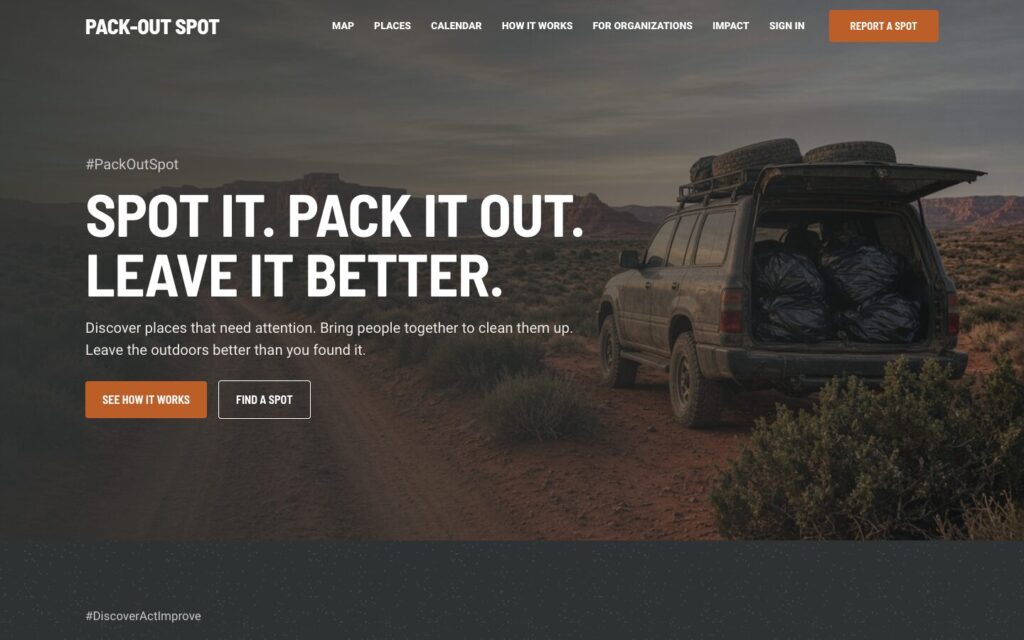
Pack-Out Spot
A community stewardship platform for places that need attention, built to work with no cell signal. It is our worked example of Spec-Driven Development: a controlled specification, 40 build phases, and tests that gate every release.
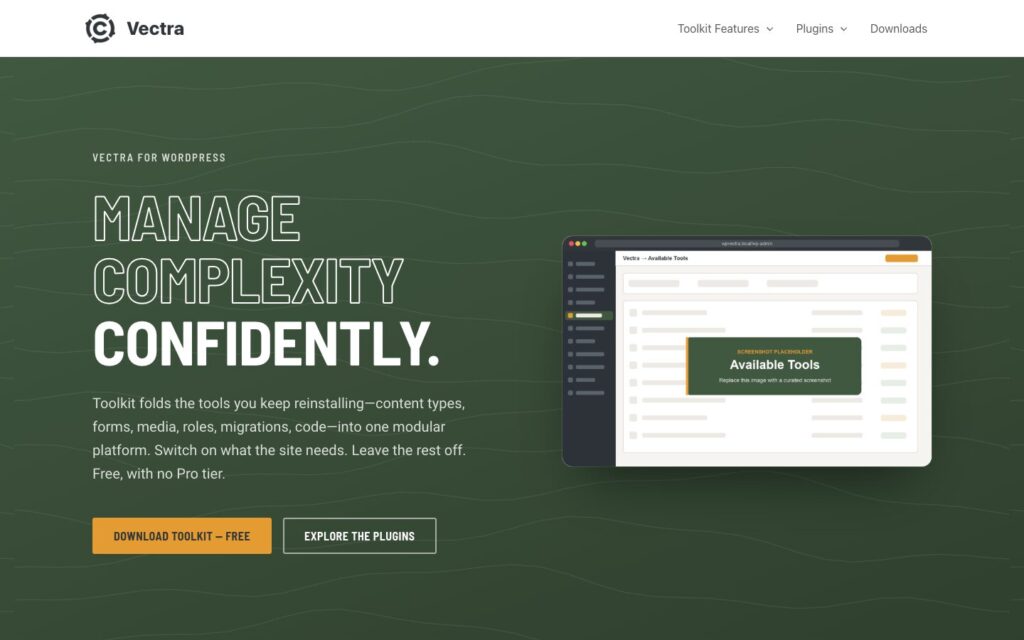
Vectra
Free tools for WordPress, with no Pro tier: Vectra Toolkit folds the plugins a site keeps reinstalling into one modular platform. It is our contribution to the WordPress community, built with the same practices we use for client work.